Making a Splash

I’m proud to announce my involvement with a new travel blog from Expedia.

The blog, dubbed Expedia Viewfinder, launched today, and aims to give readers extensive coverage from around the world, as well as insights for travelers across a variety of categories. One of those categories is family travel; I’ll be covering it from a dad’s perspective.

(Of course I’ll be covering other stuff too—adventure travel, gambling, and more. For an archive of stories I already have written for the blog, click here.)

You’ll notice a box down in the “Partners” section of this page advertising the program. Please feel free to click through and check things out. Also, please help spread the word by telling your friends and family members about it. I’m excited to be a part of the Expedia Viewfinder team, and look forward to bringing you with me on this adventure.

Family Travel + Fatherhood = Life as a Sherpa


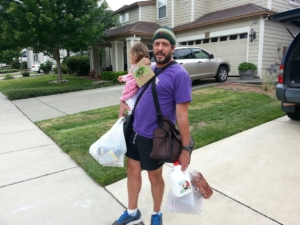
Par for the course.

Par for the course.

Magnus Ver Magnusson has nothing on me. Sure, the dude has won four of those “World’s Strongest Man” competitions. And, yes, he can do crazy-ass stuff like drag a car with his bare hands and lift kegs full of lead (or something like that). I’m sure he could even bench-press all 185 pounds of my Italian-Jewish self, without so much as breaking a sweat.

That said, there is NO WAY the Icelandic He-Man can carry more crap than I carry on Villano family vacations.

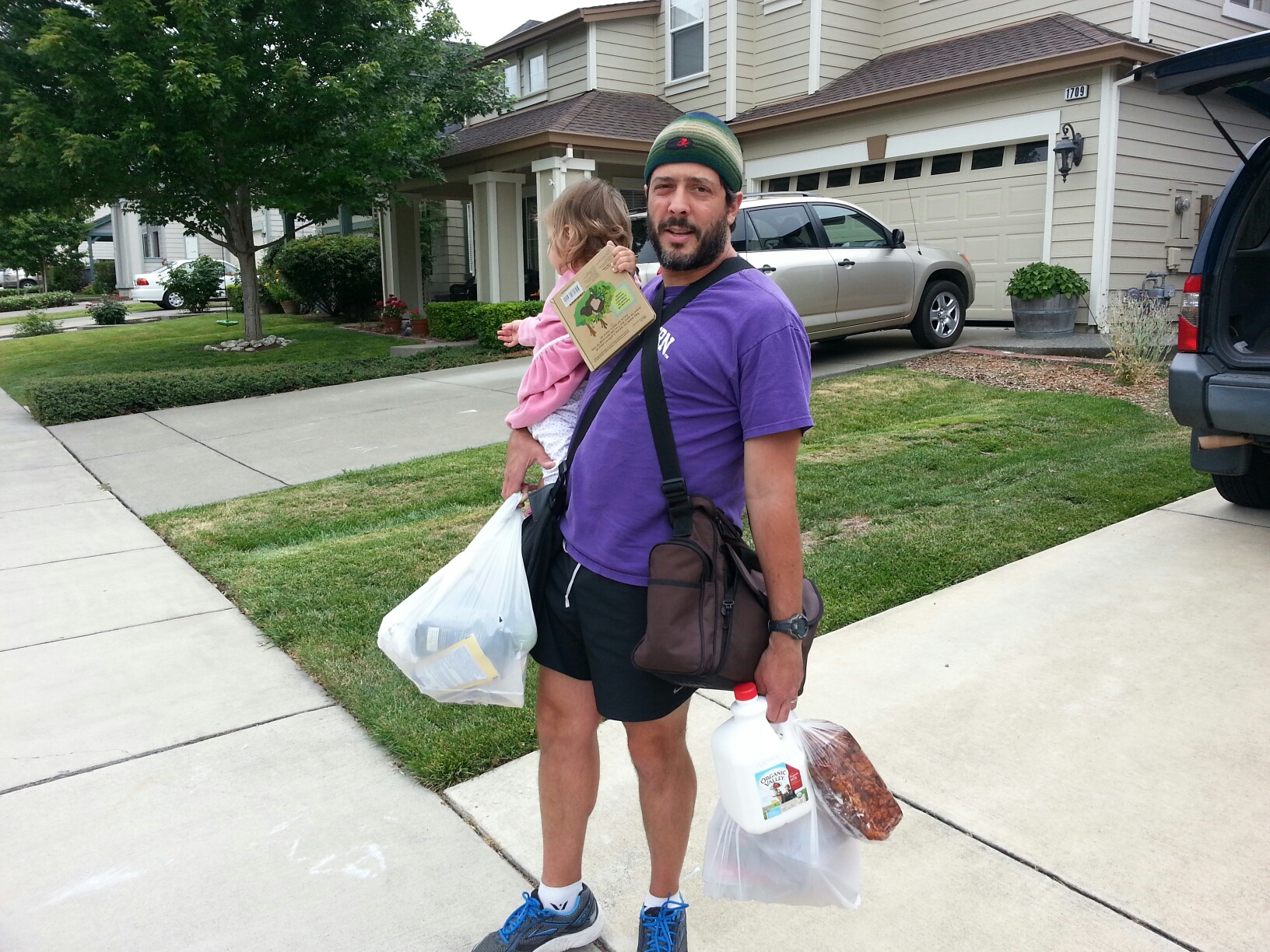
Whenever we go away (and despite my steadfast beliefs in equal parenting and obliterating traditional gender roles), I automatically assume the role of Sherpa, schlepping everything from suitcases to diaper bags, car seats to inflatable pools.

Most of the time, I’m also carrying the baby.

Like competing for the title of World’s Strongest Man, these efforts require a number of sophisticated skills. For starters, they require strong fingers, especially when you’re carrying a grocery bag on each one. Second, they require balance; it’s hard work fumbling for keys when you’re lugging a suitcase and a 20-month old with the other hand.

Finally, being the family bellhop requires a good sense of humor, since inevitably you will find yourself pushing a plastic shopping cart of princess dolls through a crowded airport.

For years, I thought this phenomenon was something only I experienced. Then, this past weekend, at a party celebrating L’s fourth birthday, I found myself in a circle with three other dads, talking about family travel. And the truth came out.

One dad talked of a recent trip during which he was tasked with carrying seven suitcases by himself. “I was holding one with my teeth,” he admitted proudly.

Another Dad joked about the ridiculousness that ensues when he and his wife travel with their twins—and the boys’ twin car seats. “We have these special car seat bags you can wear like backpacks,” he said. “I usually wear one on the front and one on the back.”

The more the four of us shared, the more we all realized we were in the same exact boat.

Which, of course, begs the question: Why? Why is it that family travel + fatherhood = life as a Sherpa? Why does a vacation with kids prompt us dudes to do our best Magnus Ver Magnusson impressions? Most important, if we dads always are carrying the majority of gear on family vacations, why aren’t we more ripped?

I’m not suggesting that our wives carry more stuff. I’m also not saying that we all should hire full-time servants like the family on “Downton Abbey.” Really, I think it’s time we dads got our own television show—the modern-day, daddy-centric version of World’s Strongest Man.

The concept is simple: Over the course of a season, the dad who lugs the most stuff through a busy airport—without dropping it—wins a title.

If the show were serialized, I’d watch every week. And with more practice (which, BTW, totally would benefit my family on trips), I might even compete. If I close my eyes, I can almost see the Wikipedia page now: “Matt Villano, World’s Strongest Traveling Dad.” Who needs a Pulitzer with a distinction like that?


The Most Important Skill for Family Road Trips

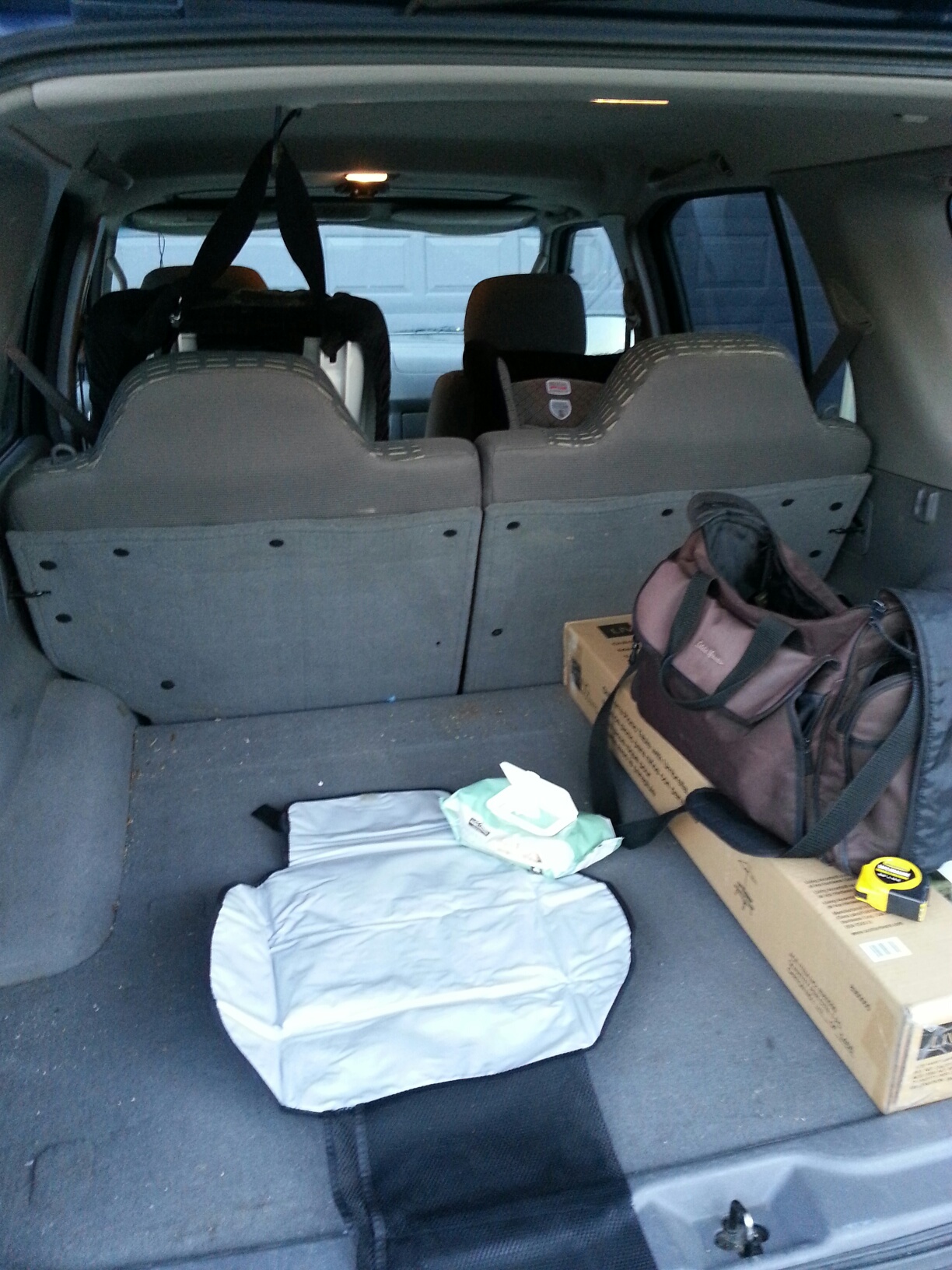
Changing station, road-trip style.

Changing station, road-trip style.

Family road trips require Mom and Dad to multi-task like nothing else. We must entertain the kids! While driving! And listening to Demi Lovato! While keeping ourselves awake!

Many of us parents must master another skill, too: The art of changing diapers in the car.

For me, this last skill is the ultimate challenge—the Everest of road trip rigors. I don’t do well changing nappies on slanted surfaces (read: front seats), and I’m too much of a perfectionist for the quick change (let’s just say I’ve got an OCD about lining up those diaper tabs so there’s no overlap whatsoever).

To say I’ve grappled with this issue would be an understatement. On any given road trip, I probably spend at least 300 miles of every 500-mile day strategizing about how to change the next diaper. (Seriously.)

That means I’ve experimented with literally dozens of tactics in the last four years. And so, in no particular order, I present to you my top three most successful strategies for mastering this skill.

Use the hood.
Most trucks, including mine (a 2001 Nissan XTerra) have relatively flat hoods, providing a changing table-like surface on which to operate. When employing this method, I treat the hood like the floor of an airplane galley, and lay a blanket beneath the changing pad to make sure no part of the baby touches the dirty steel.

NOTE: I also only utilize the hood after the car has been parked for a while, as that front panel can get pretty hot after drives of long distances.

Fold the seats.
Many minivans (and some economy cars) now come equipped with seats that fold flat—another great spot on which to change that dirty nappy. Provided at least one of the seats can fold down easily, this is by far the most efficient strategy of the bunch. In the event that a car seat prevents quick and easy folding, you might want to take a different approach.

Get in the back.
On daytrips and shorter road trips, my favorite place to change a diaper is the trunk. It’s flat! It’s spacious! And with all of the assorted junk Powerwoman and I keep back there in our respective vehicles, there are plenty of distractions. (Yes, I did just say we have junk in our trunks.)

Perhaps the only downside to trunk changes is the fact that they aren’t a viable option if the trunk is full of luggage.

That said, I admit I’ve unpacked an entire section of trunk just to change a diaper.

The lesson, dear readers, is this: On the road, a parent without a changing table must do whatever it takes to vanquish those dirty diapers.

What strategies have you tried for changing diapers in the car on a road trip? Plesae leave your input in the comment field above.

Next Stop: Babyland

Long live paper maps.

Long live paper maps.

Call me old-school. Call me a Luddite. Heck, go ahead and call me a loser, I don’t care. I like paper maps. And I plan to share this passion with my travel-loving kids. No matter what.

The maps are sort of everywhere. Each child has one on the wall in her room. We raid the local AAA store and get “research” maps before every big road trip. Occasionally, instead of building with blocks or coloring, we’ll just unfold a map of the U.S. and talk about states.

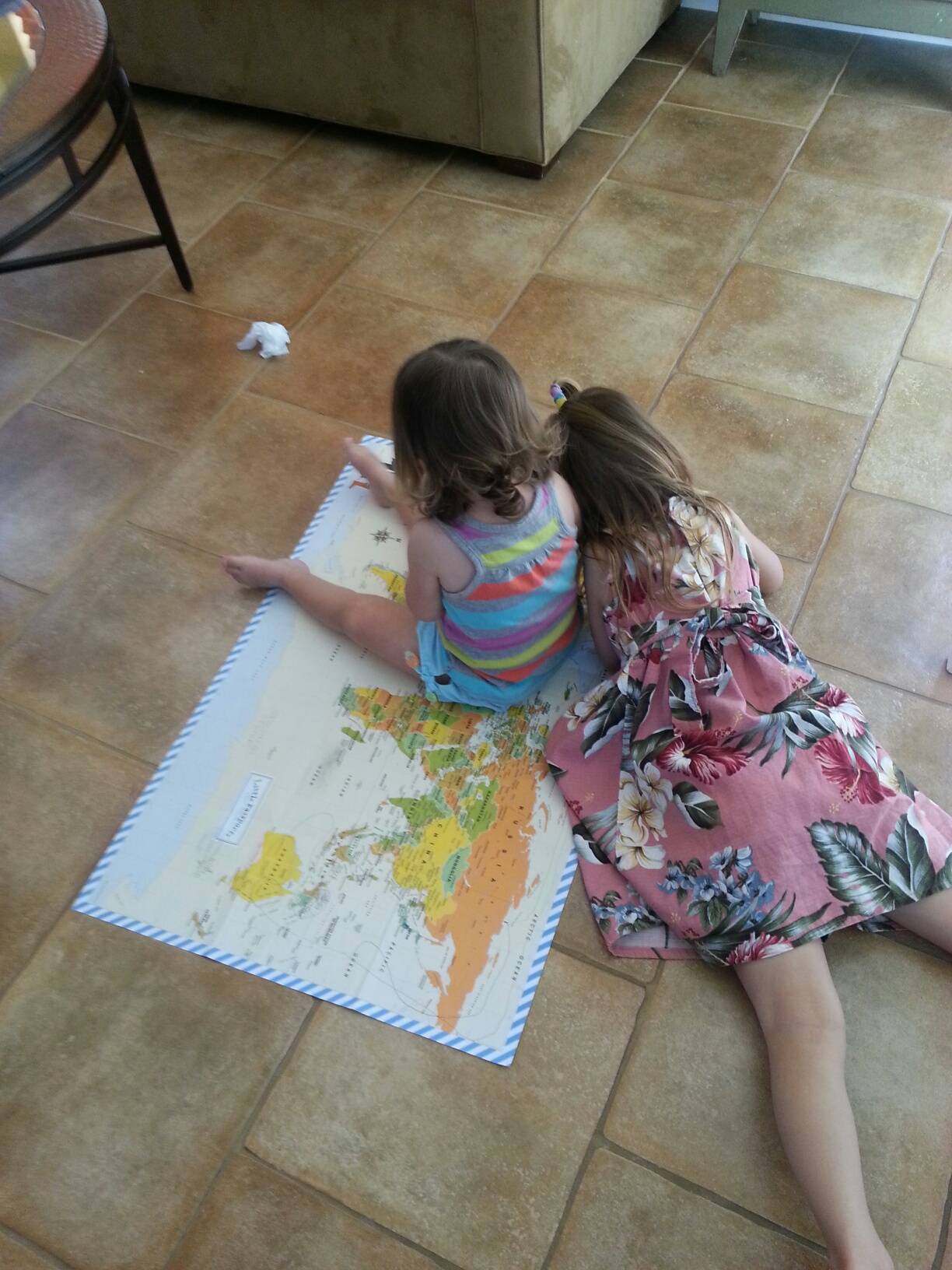
Our latest endeavor transpired this week. In the first official effort to give the girls a better sense of where on the planet we’ll be when we move to London, I bribed them with mini marshmallows and invited them to join me for an up-close-and-personal session with a world map from Little Passports.

The two of them internalized the session in different ways.

R, who is 20 months at this point and already is learning her colors, pointed to every blue nation and proudly screamed, “Blue!” as loud as she could.

L, who turns 4 on Tuesday, fixated on distances. On one hand, she was fascinated by how far England is from home (here in California), and asked me repeatedly to trace the likely flight arc of our plane. On the other hand, she couldn’t get over how close London is to Paris; when I told her we’d take a train between the two, she reacted as if I told her we’d ride unicorns.

The “lessons” lasted out for about 30 minutes total; after that I had to wash some dishes so I left the girls to play on their own.

That’s when Babyland was born.

For L, this magical place was the perfect destination for little sisters—a place where toddlers would feel at home. It was an island oasis. For babies. In the middle of the Indian Ocean.

Naturally, this was no ordinary island. As L explained it to R, in Babyland, people eat strawberry yogurt with every meal, dance to Bruno Mars at all hours of the day or night, and never leave home without at least two stuffed kittens.

She added that in Babyland, ladybugs can talk. And they all know you by name.

Many of these facts were still making their way into my notepad when I looked up to spot L with a purple crayon, drawing a flight arc that stretched to Babyland from London. She explained to her sister how planes would follow that route, and how, someday, the four of us would take one of those planes and see it all for ourselves.

L kept talking, and R listened quietly, hanging on every word. I put my pen down and listened, too.  After about five minutes, my cheeks hurt from smiling so much. Long live paper maps.

Family Travel Food for Thought

Have farmers' market, will travel.

Have farmers’ market, will travel.

The June issue of Conde Nast Traveler is jam-packed with suggestions about places to take the family on vacation this summer (and beyond).

While I take issue with the feature’s headline (sorry, folks, but no vacation involving the vagaries of children ever is “foolproof”), I think the piece is a solid collection of service-oriented destination write-ups, travel tips and first-person suggestions/anecdotes.

In short, I wish I had written the damn thing myself.

In particular, I admire the magazine’s selections of vacation destinations for big families on a budget. We never have visited Sayulita, but we have good friends who go there with their kids every year and describe it as “the cheapest and most laid-back beach town on Earth.” We have visited Honua Kai Resort on Maui, and the 2-bedroom units indeed are a great value for the price. (Usage of the phrase, “mod cons,” however, should be outlawed in all 50 states.)

It also was exciting to see the magazine give some love to the Tyler Place Family Resort, in Vermont. This place is renowned in family travel circles for programs that include supervised morning and evening activities for kids up to 30 months old.

Tyler Place also an all-inclusive, which some say are a great value for families. (In case you were wondering, I am not one of these people, and am skeptical of all-inclusives in general. But that’s another subject for another post.)

In any event, the article is worth a read.

Where do you plan to take your family for vacation this summer? Let me know in the comments field.

Embracing Accidentally Family-Friendly Hotels

Bathroom televisions: Better than stuffed animals.

Bathroom TVs: Better than stuffed animals.

It’s one thing for a hotel to go out and declare itself as “family-friendly” and stock the rooms with all sorts of kid-oriented goodies and treats. It’s another thing for a hotel that doesn’t make a big deal about family travelers to boast the kinds of amenities that make us who vacation with kids feel right at home.

I like to consider this phenomenon “AFF,” or Accidentally Family-Friendly. As a traveler, when you experience it, it’s the best kind of surprise. Like a dollop of caramel in the center of a chocolate cupcake. Or a clutch hit from a rookie who just got his call-up to the Big Leagues.

Different families can deem different hotels AFF for different reasons. Here’s a rundown of some amenities that have made qualified properties as AFF in our recent experiences:

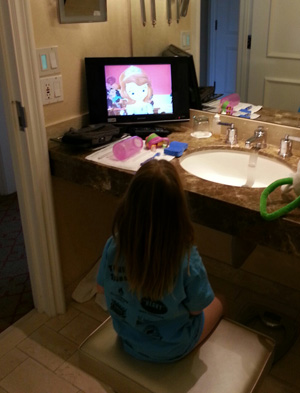
  • Bathroom televisions. Sure, L loved the free stuffed animal she received upon checking in to the Four Seasons Hotel Los Angeles at Beverly Hills, but she’s still talking about the tiny television in the bathroom. The kid liked this TV so much she refused to watch the big one out in the bedroom. It also came in handy for me—while I shaved, she chilled out next to me and hung with “Sofia the First.”
  • 24-hour room service. When we travel internationally (or just cross-country), we usually reward good in-transit behavior with favorite foods. This means ordering odd items (French fries, hummus) at all hours of the day and night. It also means we’ve become huge fans of all-hours room service. The girls love knowing they don’t have to wait for their rewards. We love the good behavior this reality usually engenders in mid-air.
  • Flashlights. My kids love building forts and “camping out” (pretty much all the time at home and) in hotel rooms. The one item from home that’s always missing: A flashlight. I usually bring a headlamp for nighttime runs (yes, I’m that guy who runs at 11 p.m.), but the big boys are just too clunky to bring along. Naturally, then, you can imagine how excited the girls get when they find a flashlight hiding in the closet of a hotel room.
  • Extra space. We love hotels like Maui’s Fairmont Kea Lani, where even the “standard” rooms actually are suites. When everyone’s awake, this configuration gives the girls room to spread out and do puzzles or have dance parties. When the girls go to sleep, it also gives Powerwoman and me the chance to shut the door to the bedroom and have some semblance of alone time.

The bottom line: Some hotels might be more family-friendly than you think. For an honest rundown of how other family travelers have rated a hotel, call the concierge and ask what in-room features seem to resonate with other customers in your demographic. Another, easier option: Ask friends, either in person or through social networking sites such as Facebook and Twitter. And remember, there’s more to “family-friendly” than toys and games.

To what extent have you found hotels AFF? Which amenities in particular did your kids adore?

Also: For more information about hotels and hotel amenities, join me this Wednesday, May 15, between 10:30 a.m. and noon, as I co-host a Twitter chat for Expedia. To follow along or participate, just log on to Twitter and search for the hashtag, #expediachat.

Managing Temper Tantrums on the Road

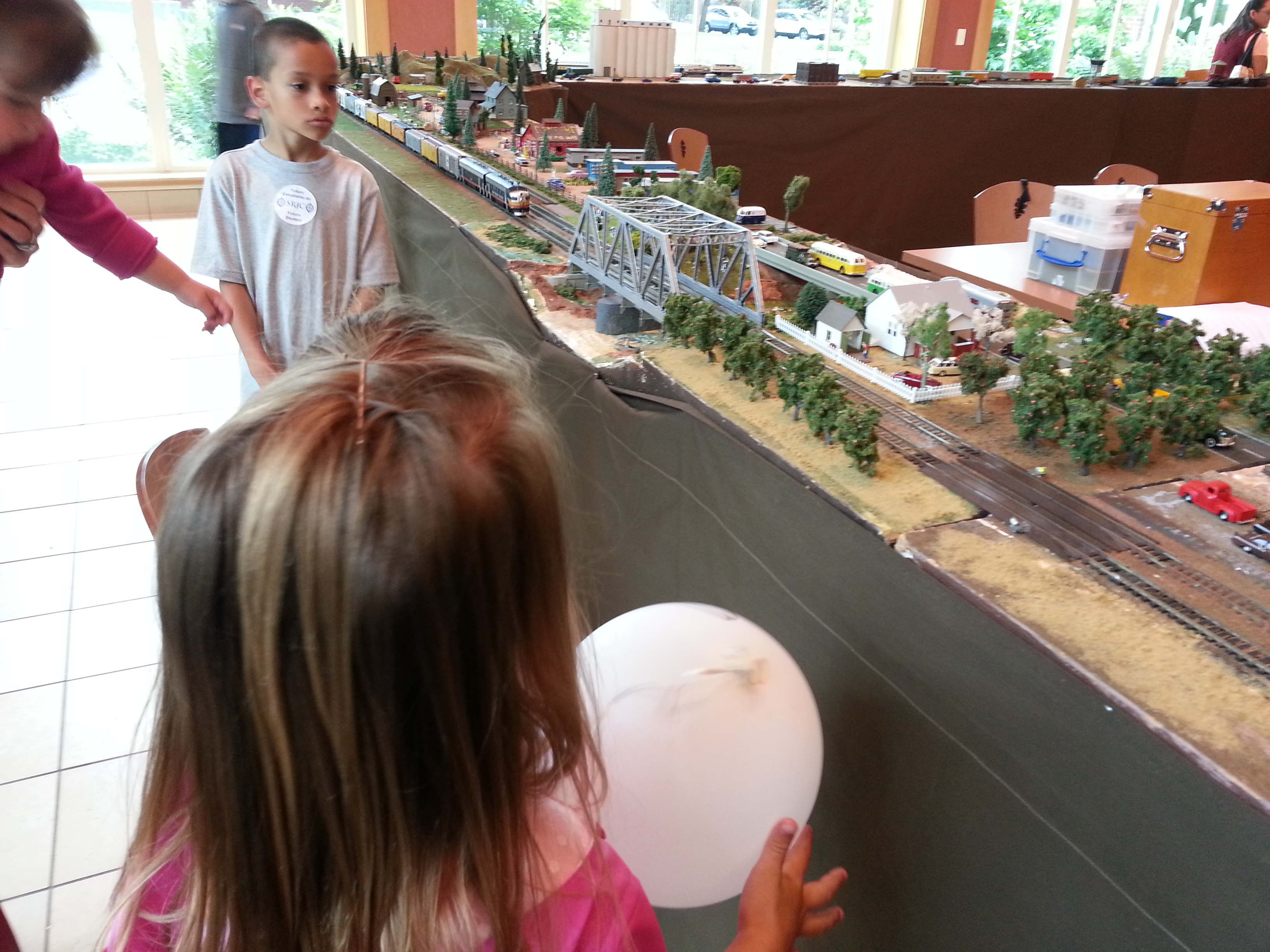
Calm down, honey; look at the trains!

Calm down, honey; look at the trains!

Unless you’re raising V.I.C.I. from “Small Wonder“, temper tantrums likely are a fact of your current life as a parent. And since kids generally aren’t discriminating about where and when they have these meltdowns, I’m guessing you probably have had to deal with a spaz-out or two on a family vacation.

We’ve got a soon-to-be 4-year-old in our midst, which means we certainly have grappled with our fair share. No matter what the circumstances, they’re never fun. For any of us.

I spent the better part of our last trip paying close attention to what triggered L’s tantrums, and how our reactions exacerbated or alleviated the situation overall. Then, when we got home, I phoned a few child psychologists (and our pediatrician) for some insight.

Based upon this research, here are four tips for dealing with tantrums the next time you’re away.

  • Be (as) flexible (as possible). The last thing you want to do in a foreign place is schlep around a child who’s going to kick and scream every step of the way. With this in mind, it’s a good idea to keep the schedule relatively fluid—that way you have the ability to wait out a temper tantrum should one occur.
  • Fend off exhaustion. Many temper tantrums are triggered by tiredness; this means they are more likely to happen toward the end of the day. Pre-empt major meltdowns with family walks and other activities when exhaustion seems imminent. Post-dinner/pre-bed dance parties almost always work. Sunset-watching sessions are good, too.
  • Deflect, deflect, deflect. One of the most classic ways to end a tantrum is to distract your child from the things that have set him or her off. Travel makes this easy, since new sights and sounds and smells abound. Seize upon stuff that’s free and public: Musicians! Flowers! A fountain! This way you’re not going over budget to keep your kids happy.
  • Avoid punishment. While “time-outs” might help your kids calm down at home, on vacation, with unfamiliar surroundings and shared hotel rooms, this form of discipline may not be as effective (and, in public places, can impact other people’s trips, too). Instead, try “time-ins” during which you calmly talk your child back to normalcy.

There probably are six or seven other items I could add to this list, but these should give you enough of a foundation upon which to build.

The most important thing to remember: Be patient. Temper tantrums are inevitable. Just because you’re on a family vacation doesn’t mean your children are going to stop being children. The quicker you move past them, the more willing you are to take these episodes in stride, the more pleasant your overall family travel will be.

Learning about Learning on the Road

Who needs classrooms when you have this?

Who needs school when you have this?

Nothing embodies my perspective on education quite like the line from Springsteen’s “No Surrender” (off Born in the U.S.A., of course): “We learned more from a three-minute record, baby, then we ever learned in school.”

I certainly held this philosophy in journalism school; even then, I knew my parents were paying to hook me up with an alumni network, and that the real education would come on internships along the way.

Now, as a parent, my wife and I embrace the same sentiment with regard to family travel.

Yes, we regret pulling our kids out of their respective schools (click here for some tips). Yes, we recognize that, in terms of our nation’s standards-based curriculum, these absences create additional challenges (both for our girls and for the teachers). We even acknowledge that there are some social ramifications of our girls being “those girls” who jet off to Yosemite or New York or the Cotswolds.

Despite all of these issues, we still think exploring through travel is the best way to teach our kids about their world.

I’ve been pondering this subject a lot lately.

My wife and I are moving the girls to London for four months this fall, and, this week, we signed a lease on a fabulous two-story flat (it’s in Maida Vale, for those of you scoring at home).

Then, earlier this week, my buddy, Rainer Jenss, wrote this thought-provoking story for AFAR magazine about his experiences on a one-year round-the-world journey with his wife and sons (who were 8 and 11, respectively, at the time).

In the story, Rainer explains his rationale for pulling his kids out of school for the trip like this: “One of the primary reasons we chose to take a yearlong sabbatical with our kids was to enhance their education; to help them learn things no [school] could ever teach them.” Then, he offers this:

    “We all want our children to excel academically. One surefire way to improve their chances for success is to get them more engaged and interested in what they’re being taught. Science: Check out the glaciers at Yellowstone, hike a volcano in Hawaii, or snorkel in the Caribbean or the Great Barrier Reef. History: Visit Colonial Williamsburg, vacation in Rome, or tour Egypt. Social Studies: How about China, India, or, of course, Washington, D.C.”

To be clear: Turning family vacations into learning experiences takes hard work.

You can’t just sloth by the pool all day; you need to be engaged with your kids for pretty much all of their waking hours. You also often need to be engaged well after they’ve gone to bed. The day before I introduced L to Muir Woods National Monument near our home, I was up until 2 a.m. studying stuff to tell her about redwoods. I’m sure I wasn’t the first dad to play that game.

All of this effort usually pays huge dividends. My older daughter still talks about the Sequoia sempervirens she saw that day at Muir Woods. Rainer writes about how one of his sons fell in love with photography after being exposed to it on their year-long trip.

Heck, I think even The Boss would agree (that first record led to a few others).

So get out there. And embrace that learning can happen in any place, at any time, about any subject. Recognizing these truths arguably is the most important education your kids ever will get. It’s also not a lesson they’ll ever learn in the traditional classroom environment.

Finally, a Scientific Explanation for Hating on Family Travelers

A scene of the crime. Or is it?

A scene of the crime. Or is it?

It always has seemed so irrational; the way ordinary, fun-loving people embark an aircraft and suddenly hate families how Tonya Harding hated (hates?) Nancy Kerrigan.

They stare. They snivel. They seethe. Sometimes, they even sneer.

We encounter these terrible humans just about every time we fly the so-called “friendly” skies, and every time we meet them, we think to ourselves, “What the hell is wrong with these people?”

Now, thankfully, we have an answer: According to researchers from King’s College in London (including the very first UK professor of “aerospace medicine), many mental processes are impaired at altitude. Read between the lines and this discovery means, quite simply, that flying makes people dumb.

Finally, everything is illuminated. The guy who changed his baby’s diaper on flight attendant jump seats. The dude who slapped a crying baby on an airplane’s descent. The couple that bribed fellow passengers on a cross-country flight with goodie bags.

All of these people behaved badly. And all of them were, obviously, “impaired.”

Thanks to David Gradwell, all of this bad behavior makes perfect sense; for better or for worse, the very act of flying has turned our brethren against us.

As the objects of derision and hatred, we family travelers COULD blame the airlines. All this time, we’ve put up with lousy food, rising prices and dwindling benefits for enduring the additional challenge of traveling with kids. Now we find out these companies are sitting back idly while they poison our countrymen (and women) against us. The bastards!

I suppose we also could blame our fellow passengers. They willingly board these planes, tacitly accepting anything and everything that occurs as a result.

Sure, they might end up next to a former wide receiver for the LFL with whom they decide to join the mile-high club. But they also might end up sitting behind a baby who is acting like a baby, and therefore (to them, people) deserves life in a North Korean prison.

Instead, dear readers, I offer a different solution: Forgiveness.

Our fellow passengers know not what they do when they call our daughters “demons.” They aren’t themselves when they encourage us to “get a muzzle.” Instead of taking offense at these types of messages, from now on, I will look at the messengers and feel pity, or just nod and smile.

The way I see it, turning the other cheek like this is the very least we can do. After all, like Gradwell says, life at 30,000 feet makes us all do some pretty crazy stuff.